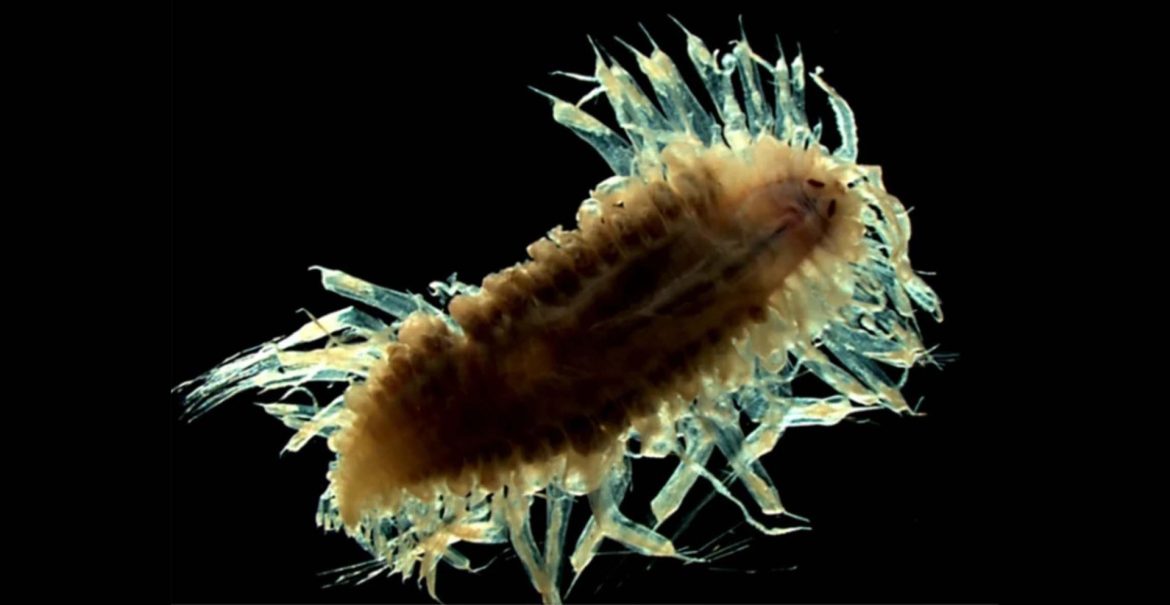
Bathyadmetella dollypartonae’s appendages reminded the team of Dolly Parton’s blonde hair. © Lenka Neal
A “beautiful” new species from one of the least-known areas of the ocean has been named after Dolly Parton.
Scientists at the Natural History Museum work 9 to 5, and more besides, to name dozens of marine species every year. So, when they identified a new species of worm covered in pale, hair-like sheaths, there was only one choice for who to name it after – and it wasn’t Jolene.
Instead, scientists from the Natural History Museum and University of Gothenburg decided to name the 14-millimetre-long worm after Dolly Parton following her death earlier this year. The team wanted Bathyadmetella dollypartonae to honour the iconic figure’s music, writing and humanitarian work.
Lenka Nealova, the lead author of the study from the Natural History Museum, says, “News of Dolly Parton’s passing reached us while we were describing this species, and, while it may not have the flaming locks of auburn hair she once sang about, its long appendages reminded us of her flowing blonde locks.”
“As a result, it seemed only right to name this species after someone who has done so much good through their donations and charitable work. Dolly Parton, we will always love you.”
Bathyadmetella dollypartonae comes not from islands in the stream, but instead the depths of the Amundsen Sea off the western coast of Antarctica. It’s part of a family known as the scale worms, which also includes the so-called Elvis worm (Peinaleopolynoe elvisi) – named for its shimmering iridescent scales reminiscent of the rock legend’s flamboyant stage outfits.
It’s likely that Bathyadmetella dollypartonae was also more visually stunning when its specimens were first collected during a British Antarctic Survey cruise in 2008. However, by the time they were studied and photographed, these colours had largely faded due to their preservation in alcohol.
Dr Helena Wiklund, from the Natural History Museum and the University of Gothenburg, says, “It didn’t quite have a coat of many colours, but, according to the notes from the original expedition, Bathyadmetella dollypartonae was purple when it was collected. Unfortunately, there are no photographs of the living worms.”
“However, I’m due to take part in another expedition to Antarctica next year and hope to see the Dolly Parton worm alive for the first time. That would be cool.”
Expeditions like Helena’s are vital to find out more about the deep sea species of the Southern Ocean, which are very poorly known. It’s something that’s only becoming more important as a result of climate change, which is causing the region to change dramatically.
Western Antarctica, where Bathyadmetella dollypartonae is from, is thought to be particularly vulnerable to rising temperatures. Areas such as the Thwaites ice shelf are at increasing risk of collapse, which could cause global sea levels could rise by as much as 70 centimetres.
As a result, naming the species that live in this area, such as Bathyadmetella dollypartonae, is vital to understand the impacts of rising temperatures in western Antarctica. Natural History Museum scientists are working rapidly with colleagues around the world to investigate the region’s wildlife before it’s too late.
The paper ‘Dazzling in the Deep—Bathyadmetella dollypartonae sp. nov. (Annelida, Polynoidae) with Emendation of the Genus and Its Phylogenetic Placement’ opens in a new window was published in the journal Taxonomy.